
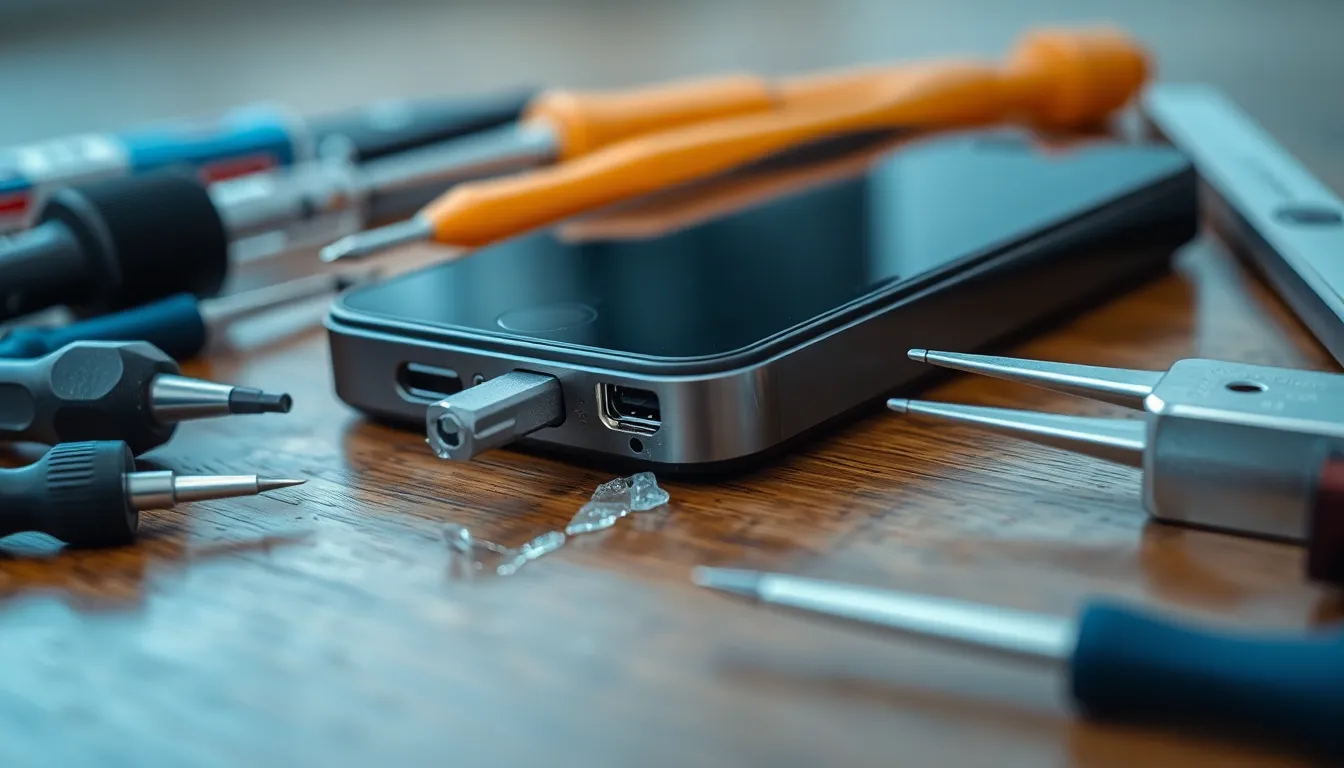
When your iPhone’s charging port starts acting like a diva, refusing to connect to the charger, it can feel like a mini crisis. Gone are the days of easy charging; now you’re stuck playing the “wiggle and pray” game. But before you toss your phone out the window or start a GoFundMe for a new one, let’s dive into the world of charging port repairs.
Understanding Charging Port Issues
Charging port problems can severely affect an iPhone’s usability. Recognizing the symptoms and understanding the causes helps address these issues effectively.
Common Symptoms of Charging Port Problems
Users often notice a few signs when the charging port has issues. Difficulty connecting the charger frequently occurs. Devices may show no power despite being plugged in. Loose connections might result in intermittent charging. Signs of corrosion inside the port can also affect functionality. Dust and lint buildup is common, complicating charging efforts. Finally, some users experience frequent error messages related to charging.
Causes of Charging Port Damage
Multiple factors contribute to charging port damage. Physical wear and tear from regular usage is a primary cause. Dropping the phone can misalign internal components. Exposure to moisture often leads to corrosion within the port. Charging with incompatible cables can also create stress on the connector. Lastly, environmental contaminants like dirt and debris quickly accumulate, impairing connection quality.
Repair Options for Charging Port
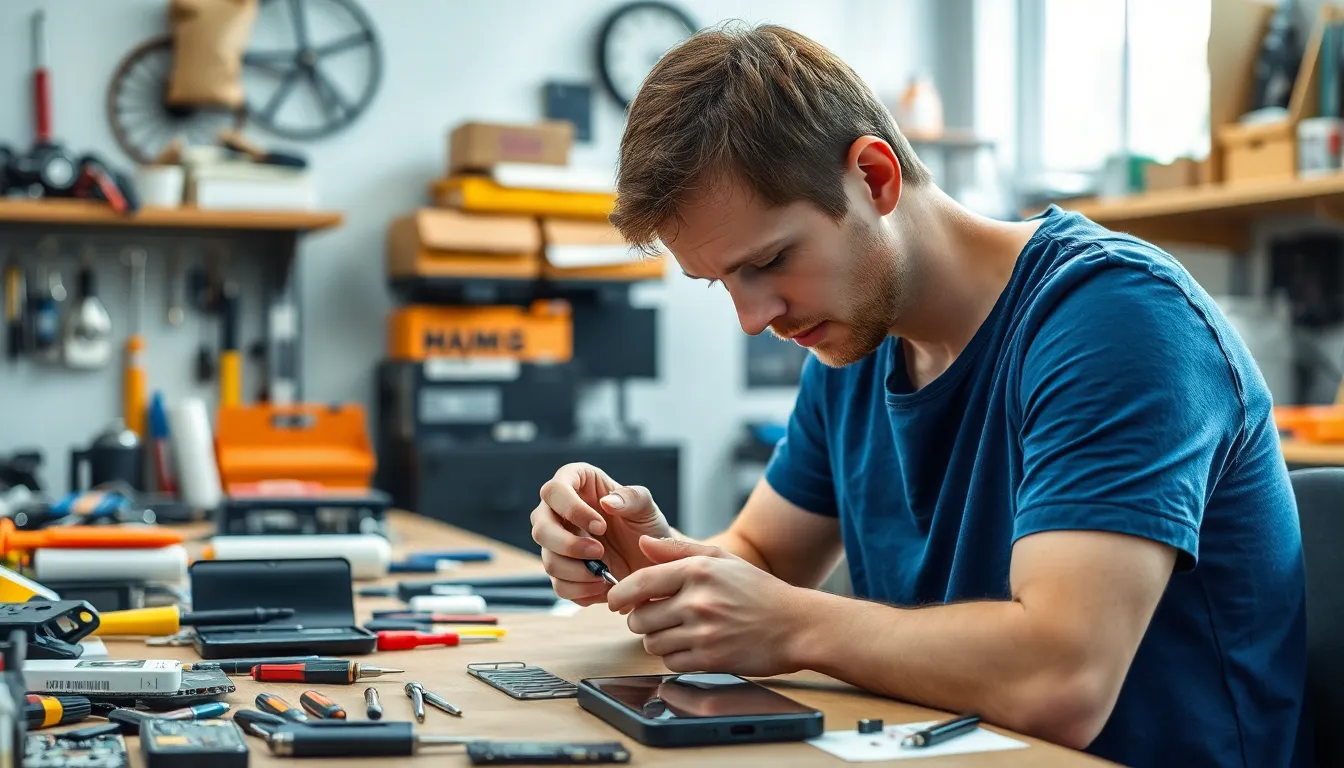
Charging port repairs present various options. Users often choose between DIY attempts and professional services, each offering distinct advantages and drawbacks.
DIY Repair Versus Professional Services
DIY repair can save money and provide a sense of accomplishment. Many find online tutorials and video guides helpful for understanding the process. However, potential risks accompany DIY efforts; improper handling might cause additional damage or void any existing warranties. Professional services ensure trained technicians address issues accurately, minimizing the likelihood of further complications. While this option tends to cost more, it guarantees high-quality repairs backed by expertise.
Cost of DIY Repair Tools
Investing in DIY repair tools incurs costs that vary widely. Basic equipment, including screwdrivers and opening tools, ranges from $20 to $50. More advanced kits, which include replacement components, can elevate costs to $100. Additional expenses may arise from purchasing replacement parts; charging ports themselves typically cost between $15 and $30. Before deciding, individuals should weigh the total costs against the potential need for professional repairs.
Average Costs of Repairing Charging Ports
Repairing a charging port on an iPhone varies based on service type. Both manufacturer and third-party repair shop prices reflect the complexity of the repair.
Manufacturer Repair Costs
Manufacturer repair costs generally range from $100 to $200. Apple’s official service typically includes quality assurance and genuine parts, which justifies the higher price. Repairs through authorized service providers might align with these costs, although prices can vary by location. Many customers prefer this route for warranty preservation and technicians’ expertise. Depending on the model, costs can fluctuate; newer models often incur higher charges due to more advanced components.
Third-Party Repair Shop Costs
Third-party repair shop costs usually range from $50 to $120. These shops often offer competitive pricing and quicker service as alternatives to manufacturer options. Pricing can differ significantly between local businesses, so shoppers are encouraged to compare quotes. Many third-party repairs utilize reliable parts, though not always original equipment manufacturer (OEM) components. Warranty coverage may not be provided, leaving customers responsible for future issues. Users often find that local shops can fix charging port issues faster than manufacturer services, making them appealing for urgent repairs.
Factors Affecting Repair Costs
Several factors can influence the overall costs of repairing an iPhone charging port. These elements vary depending on the specific circumstances surrounding the repair.
Warranty Impact on Repair Prices
Repair prices often differ based on warranty status. If the iPhone is still under warranty, manufacturer repairs may come at no additional cost. Warranty coverage typically does not apply to accidental damage, including charging port issues resulting from drops or exposure to moisture. Warranty repairs provide peace of mind, as authorized technicians use genuine parts. Paying out of pocket for repairs may increase costs significantly, especially if it requires extensive labor or parts.
Phone Model Variations in Repair Costs
Phone models also affect repair costs significantly. Older iPhones often have lower repair expenses due to readily available parts. Newer models may have higher repair prices because of increased complexity and the need for specialized tools. For instance, the iPhone 13 and later versions may require advanced techniques, resulting in costs that can exceed $200. Variations in repair prices reflect the technological advancements and design changes in each new model. Comparing quotes helps identify the most affordable option for the specific iPhone model.
Repairing a malfunctioning iPhone charging port doesn’t have to be overwhelming. With a variety of options available from DIY repairs to professional services, users can find a solution that fits their needs and budget. Weighing the costs of tools and parts against professional repair prices is essential for making an informed decision.
Whether opting for a quick fix at a third-party shop or relying on manufacturer expertise, understanding the factors influencing repair costs can lead to significant savings. It’s crucial to assess the specific iPhone model and warranty status before proceeding. By exploring all available avenues, users can ensure their device gets the care it needs without breaking the bank.


