

In a world where software gets all the glory, hardware quietly holds the key to performance and reliability. It’s the unsung hero of technology—the sturdy backbone that keeps everything running smoothly. Whether it’s your trusty laptop or that gaming rig that makes your friends envious, hardware is the muscle behind the magic.
Overview of Hardware
Hardware encompasses the physical components of computers and other devices. These components include processors, motherboards, memory sticks, and storage drives. The central processing unit (CPU) acts as the brain of the computer, executing instructions and processing data. Another key element, the motherboard, connects all components and facilitates communication among them.
Memory plays a pivotal role in performance. Random Access Memory (RAM) temporarily stores data for quick access, impacting speed and efficiency. Solid State Drives (SSDs) offer faster data retrieval than traditional Hard Disk Drives (HDDs), enhancing overall system responsiveness.
Graphics processing units (GPUs) are crucial for graphics-intensive applications. GPUs handle rendering images, enabling smooth gameplay and video editing. Their performance is vital for gamers and professionals in graphic design.
Power supplies provide necessary energy to hardware components. They convert electrical power from outlets into usable forms for the system. It’s critical that power supplies meet the required wattage for all connected devices.
Cooling systems maintain optimal operating temperatures. Fans and heat sinks prevent overheating, ensuring long-term reliability and performance. Without proper cooling, components may suffer damage or reduced efficiency.
Different hardware configurations exist for specific user needs. Gaming rigs prioritize high-performance GPUs and CPUs, while business setups emphasize reliability and multitasking capabilities. Custom builds allow users to tailor systems based on preferences and requirements.
Understanding hardware components and their functions helps users make informed decisions. Equipped with knowledge, they can select devices that meet their needs, ensuring optimal performance for diverse applications.
Types of Hardware
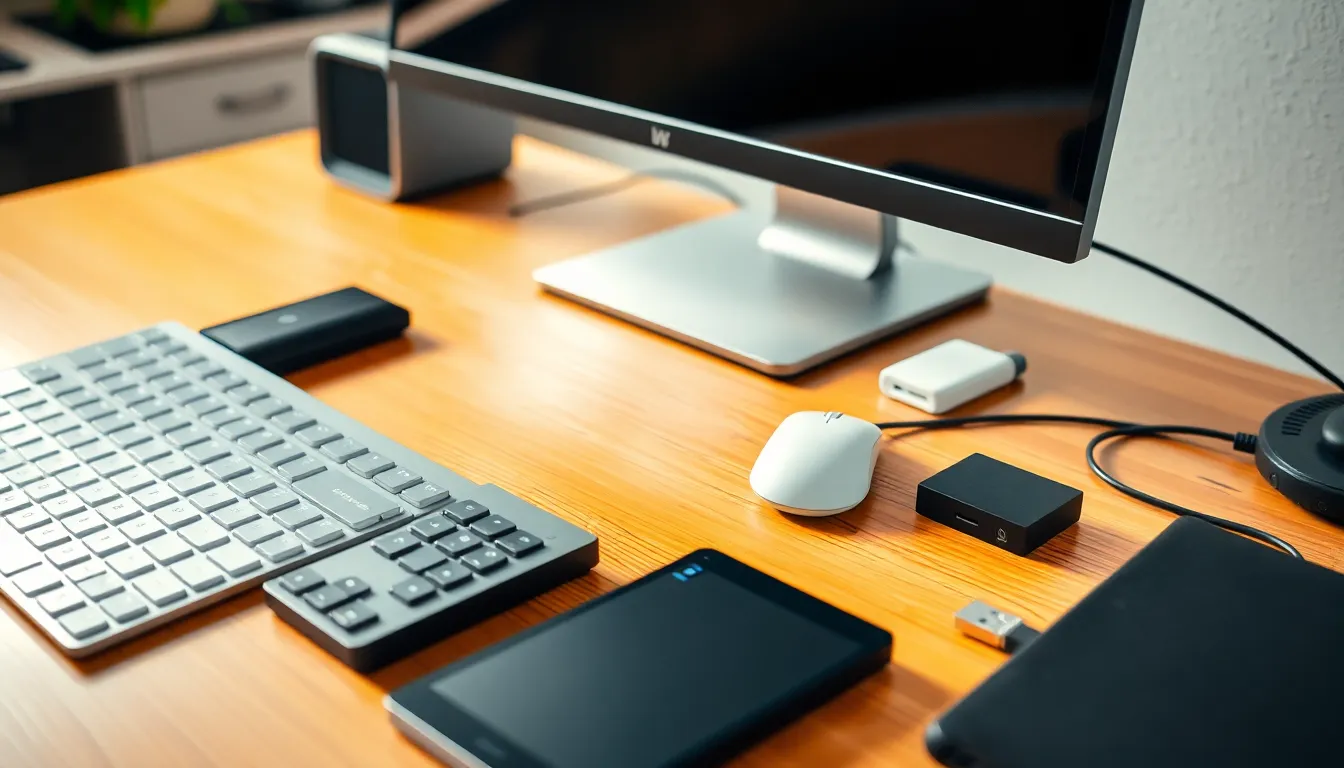
Hardware encompasses various components essential for the functioning of computers and devices. Each category serves specific purposes that contribute to overall performance.
Input Devices
Input devices facilitate user interaction with the computer. Key examples include keyboards and mice, which allow users to enter commands. Scanners convert physical documents into digital formats, while microphones capture audio. Touchscreens provide direct manipulation of graphical interfaces, enhancing user experience. Game controllers cater to gamers, offering specialized controls for gameplay. Collectively, input devices transform physical actions into digital signals, bridging the gap between users and technology.
Output Devices
Output devices present processed data in a comprehensible form. Monitors display visual information, while printers produce physical copies of documents and images. Speakers deliver sound output, creating an immersive auditory experience. Projectors expand visual content for larger audiences, often used in presentations and events. Headphones enhance personal listening experiences, particularly in gaming and media consumption. Each type of output device plays a crucial role in conveying information effectively.
Storage Devices
Storage devices hold data for future access and use. Hard Disk Drives (HDDs) provide substantial capacity for data archiving, while Solid State Drives (SSDs) offer faster read and write speeds. External drives facilitate backup solutions, allowing users to safeguard important files. USB flash drives offer portable storage options, enabling easy file transfer between devices. Cloud storage solutions ensure data accessibility from anywhere with internet connectivity. Understanding diverse storage solutions aids users in selecting the right option for their needs.
Hardware Components
This section delves into the essential hardware components that form the backbone of any computing device.
Central Processing Unit (CPU)
The Central Processing Unit serves as the brain of the computer. It executes instructions and processes data at high speeds to ensure seamless operation. Different CPU models cater to various performance levels, impacting overall system responsiveness. Higher clock speeds and more cores typically enhance multitasking capabilities. Examples of popular CPUs include Intel’s Core series and AMD’s Ryzen series, each designed for specific needs, from casual computing to gaming. Users aiming for high performance benefit from selecting CPUs with adequate cache memory and thermal management features.
Motherboard
The motherboard acts as the central hub, connecting all hardware components. It facilitates communication between the CPU, RAM, storage, and peripherals. Different form factors, such as ATX and microATX, offer varying expansion options. Features like chipset compatibility and available ports significantly influence component selection. Brands like ASUS and MSI provide motherboards with reliable performance and extensive features. Choosing a quality motherboard ensures stable connectivity and supports future upgrades, maximizing the lifespan of the entire system.
Graphics Processing Unit (GPU)
The Graphics Processing Unit specializes in rendering images and playing video. A dedicated GPU significantly improves graphics performance for gaming, graphic design, and video editing. NVIDIA and AMD dominate the GPU market, with various models catering to different graphical demands. For instance, gaming enthusiasts favor high-end GPUs like the NVIDIA GeForce RTX series for advanced graphical capabilities. Selecting a GPU with sufficient memory and processing power enhances visual experiences and ensures compatibility with demanding applications and games.
Importance of Hardware in Computing
Hardware serves as the foundation of computing systems. It includes critical physical components like the central processing unit (CPU), motherboard, memory, and storage drives. The CPU acts as the brain, processing instructions and managing data flow.
Motherboards connect all components, facilitating communication between various hardware elements. Greater clock speeds and additional cores enhance multitasking capabilities. Popular CPUs, like Intel’s Core series and AMD’s Ryzen, cater to different performance needs.
Memory plays a vital role in computing efficiency. Random Access Memory (RAM) directly impacts speed, allowing for smoother multitasking. Solid State Drives (SSDs) improve data retrieval speeds compared to traditional Hard Disk Drives (HDDs).
Graphics processing units (GPUs) are essential for graphics-heavy tasks. They render images in gaming and professional video editing, improving visual experiences significantly. Leading brands like NVIDIA and AMD provide GPUs with varying memory and processing power, allowing users to choose based on their requirements.
Power supplies convert electrical energy into usable power for the components. An efficient power supply ensures stable performance across hardware, while cooling systems maintain optimal temperatures. Proper cooling prevents overheating, which could damage sensitive components.
Different hardware configurations target specific use cases. Gamers often prioritize high-performance parts, while business setups emphasize reliability and multitasking capabilities. Input and output devices also contribute significantly, with keyboards, mice, monitors, and printers facilitating user interaction and data presentation.
Understanding hardware’s diverse types and functions enables informed decisions. This knowledge empowers users to select the right components, maximizing performance for various applications. Prioritizing hardware leads to enhanced computing experiences, ultimately bridging the gap between technology and user needs.
Future Trends in Hardware
Emerging hardware trends shape the technology landscape. Enhanced performance drives innovations, with artificial intelligence (AI) integration becoming prevalent. AI accelerates processing, optimizing tasks across various applications. In addition, manufacturers focus on energy-efficient components, promoting sustainability in device design.
Advancements in chip technology lead to smaller, more powerful processors. Quantum computing gains traction, promising increased processing power far beyond traditional systems. This evolution could revolutionize fields like cryptography and large-scale data analysis. Flexibility of hardware allows for versatile applications, catering to diverse user needs.
Trends indicate a rise in modular devices, facilitating upgrades and repairs. Such designs empower users to customize their hardware configurations easily. Furthermore, increased connectivity through 5G networks enhances the performance of connected devices, enabling real-time data transfer. That connectivity is crucial for the growth of the Internet of Things (IoT).
Emerging technologies like augmented reality (AR) and virtual reality (VR) demand advanced hardware capabilities. GPUs become essential for these applications, as they must handle complex graphics rendering with ease. Innovations in cooling systems also support high-performance components, ensuring optimal functioning.
Lastly, the market sees the growing popularity of edge computing. This shift decentralizes data processing, minimizing latency and enhancing efficiency. As businesses increasingly rely on real-time processing, hardware adaptations will further fulfill these requirements. By staying informed about future hardware trends, users can make better choices for their technology needs.
Hardware remains the backbone of technology and its importance can’t be overstated. As users become more aware of their hardware choices they can significantly enhance their computing experiences. Understanding the various components and their functions empowers individuals to optimize performance tailored to their specific needs.
Looking ahead the evolution of hardware promises exciting advancements. With innovations in AI energy efficiency and modular designs users will have even more options to customize their setups. Staying informed about these trends ensures that everyone can adapt to the fast-paced world of technology. Embracing hardware advancements will not only improve performance but also pave the way for a more connected and efficient future.


